
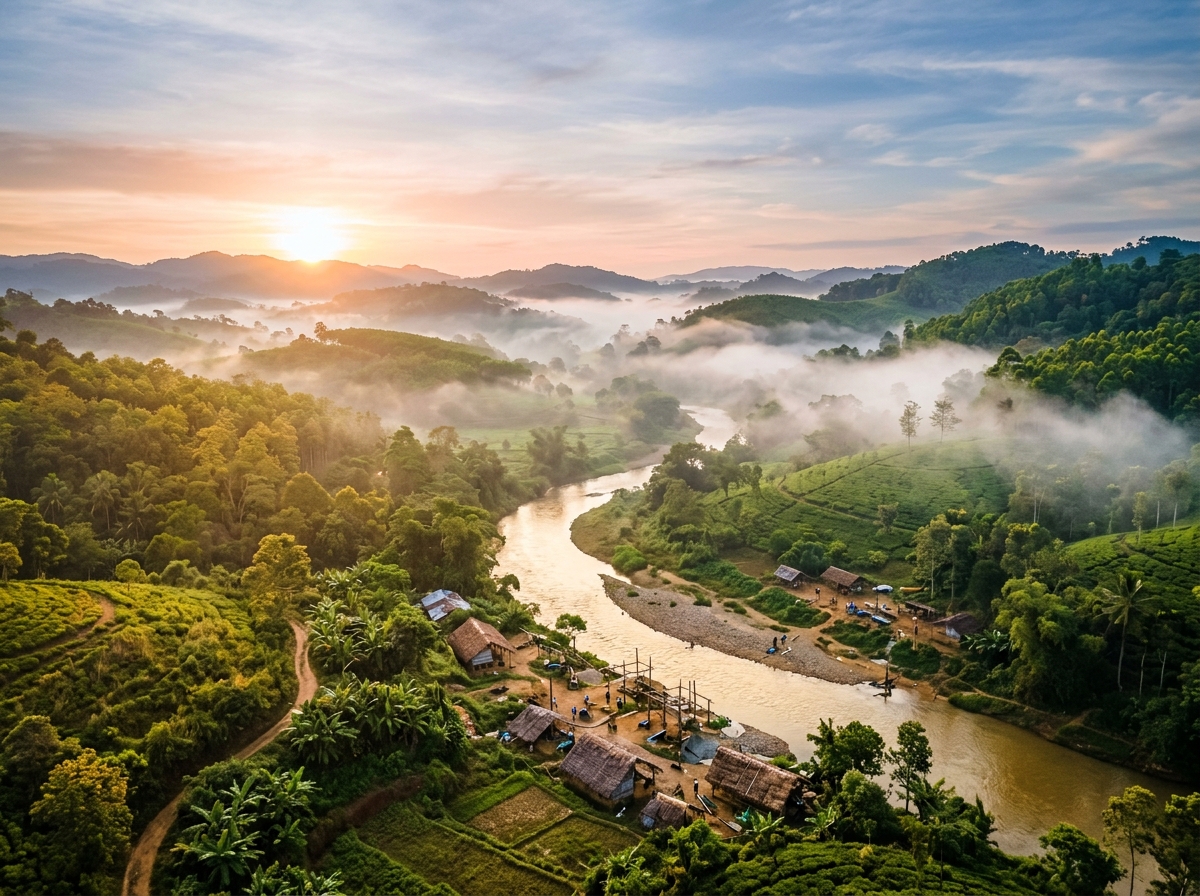
For over two thousand years, Sri Lanka has been referred to by mariners and scholars as *Ratna-Deepa*, meaning the Island of Gems. In ancient Sanskrit literature, classical Arabic tales of Sinbad the Sailor, and the accounts of historical travellers like Marco Polo, the island has always shone as the world's primary repository of fine colored stones.
The Geology Behind the Magic
How did a small island in the Indian Ocean acquire such a concentration of minerals? The story lies in the geological history of the Earth. Sri Lanka's bedrock belongs to the Precambrian era, making it over 500 million to 2 billion years old. Intense heat, tectonic compression, and magma intrusions recrystallized rocks deep within the Earth, forming corundum (sapphire and ruby), spinel, chrysoberyl, and tourmaline. Over eons, weathering washed these minerals down from the mountain heights into the alluvial gravel beds of the river valleys below.
Marco Polo's Sapphire Dreams
In the late 13th century, Venetian explorer Marco Polo visited Ceylon and remarked in his logs that the island produced "the finest rubies and sapphires that exist in the world." He specifically mentioned the King's personal ruby: a flawless, palm-sized crystal of intense fiery color.
The Modern Legacy
Today, Sri Lanka remains one of the world's top sapphire exporters. Unlike other regions that rely on industrial open-cast strip mining, Sri Lankan law strictly mandates small-scale, traditional mining. This ensures: 1. Low environmental footprints. 2. High local labor employment. 3. Natural preservation of topsoil.
Rathnadeepa Expeditions is proud to introduce you directly to this living geological museum.